$286 Million From First Brands: The Same Case Structure Exists in Every Electronics Importer
A $286M tariff-fraud claim hit First Brands on a few thousand part numbers. Every electronics importer carries the same exposure across a far larger surface, surfacing three to four years after the entry clears.

Miguel Altamirano
Go-to-Market, Sluicebox
Published
June 8, 2026
Table of contents
- Three customs-fraud actions above $50 million in six months.
- Electronics carries the exposure across the largest surface.
- OEMs, distributors, hyperscalers, and component manufacturers face the same demand.
- The compliance stack most electronics importers run no longer clears the bar.
- How Sluicebox is approaching the cascade.
- The complaints filed in 2024 and 2025 are still under seal.
- Sources
The same case structure exists in every electronics importer.
On May 26, US Customs and Border Protection took its place in line behind First Brands' bankers, $286 million proof of claim in hand, for allegedly underpaid tariffs on Chinese-origin auto parts.
For an electronics OEM, distributor, hyperscaler, or component manufacturer, this is a preview. The exposure sits thousands of lines deep. Lag from creation to claim: three to four years.
Three customs-fraud actions above $50 million in six months.
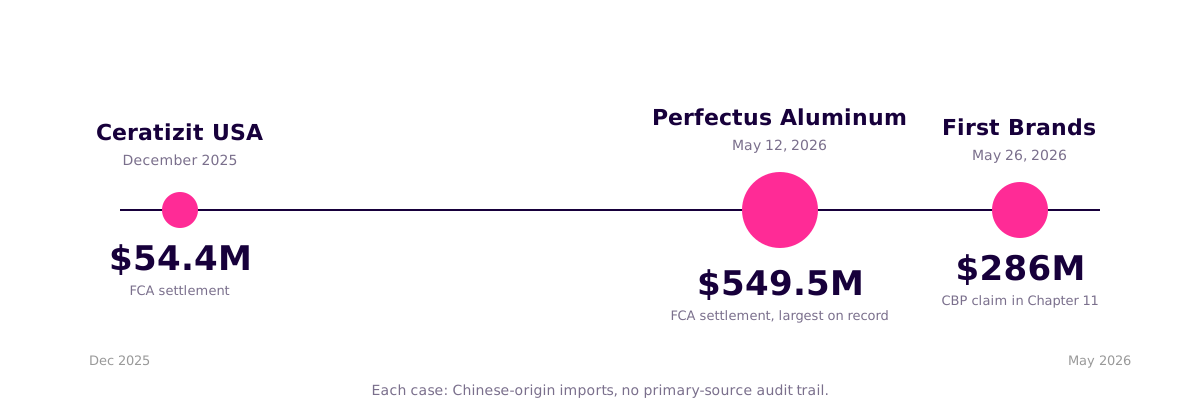
Perfectus Aluminum settled $549.5 million on May 12 2026, the largest customs-related FCA settlement ever. Two weeks later, CBP filed the $286 million First Brands claim. Both followed Ceratizit's $54.4 million December 2025 settlement. Same fact pattern: Chinese-origin imports, no audit trail.
Electronics carries the exposure across the largest surface.
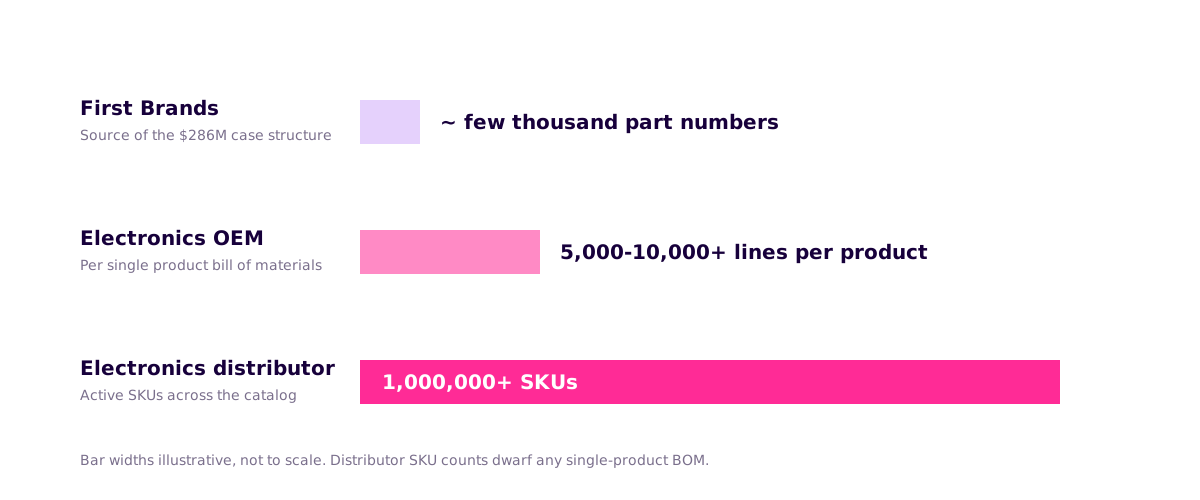
First Brands ran on a few thousand part numbers. An electronics OEM matches that on a single bill of materials. A distributor crosses it hundreds of times over.
Every line is its own declaration. Section 232 requires every subject aluminum entry to declare smelt and cast country (CBP CSMS #55424218); without mill-cert documentation, importers file "UN" and accept the default, which reaches 200% on Russian-origin metal. The April 2026 proclamation extended this to copper, sweeping in aluminum extrusions, heat sinks, enclosures, copper rod, copper wire, and busbars. Finished electrical equipment sits outside the derivative lists; its metal inputs do not.
Same gap that brought down First Brands, multiplied by line-item density.
OEMs, distributors, hyperscalers, and component manufacturers face the same demand.
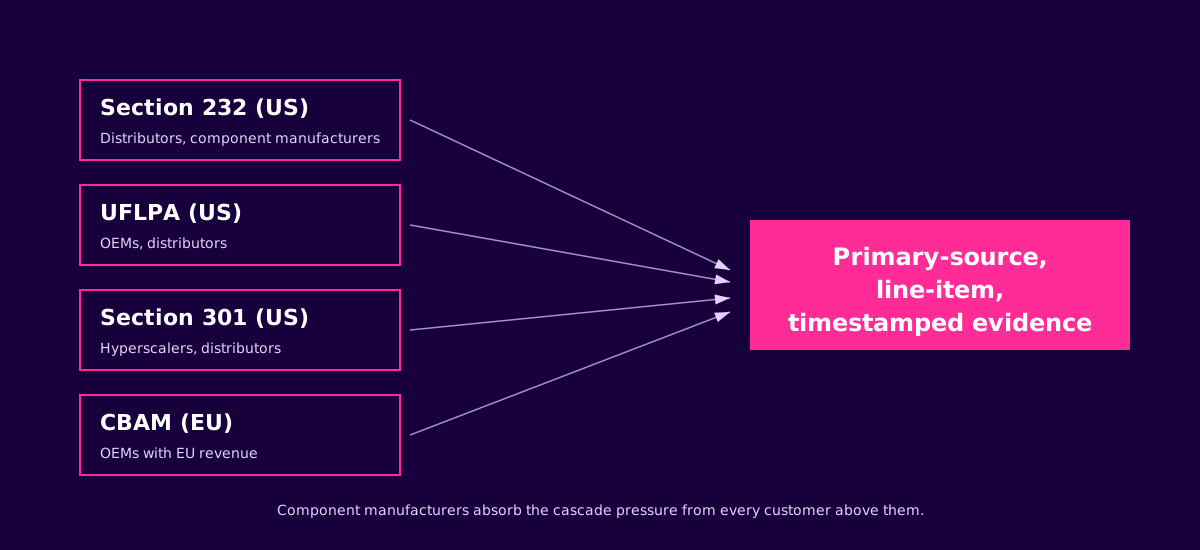
Step outside Section 232 and the same demand follows electronics importers. UFLPA forces importers to prove their goods are clean of forced labor: 144 entities listed, ten thousand shipments denied since 2022 (DHS UFLPA Strategy 2025 Update). Section 301 stacks 50% on Chinese semiconductors as of January 2025, with another layer in June 2027.
CBAM closes the loop in Europe: definitive phase live January 1 2026, 180-category downstream extension proposed in December (European Commission DG TAXUD). Same import, four regimes, same evidence demanded per line.
Component manufacturers absorb the cascade from every customer above.
The compliance stack most electronics importers run no longer clears the bar.
CBP Headquarters Ruling H350722 (16 January 2026) held that AI classification is customs business and the final decision rests with a licensed broker. Reasonable care under 19 USC §1592 requires documented evidence per line, traceable to primary source.
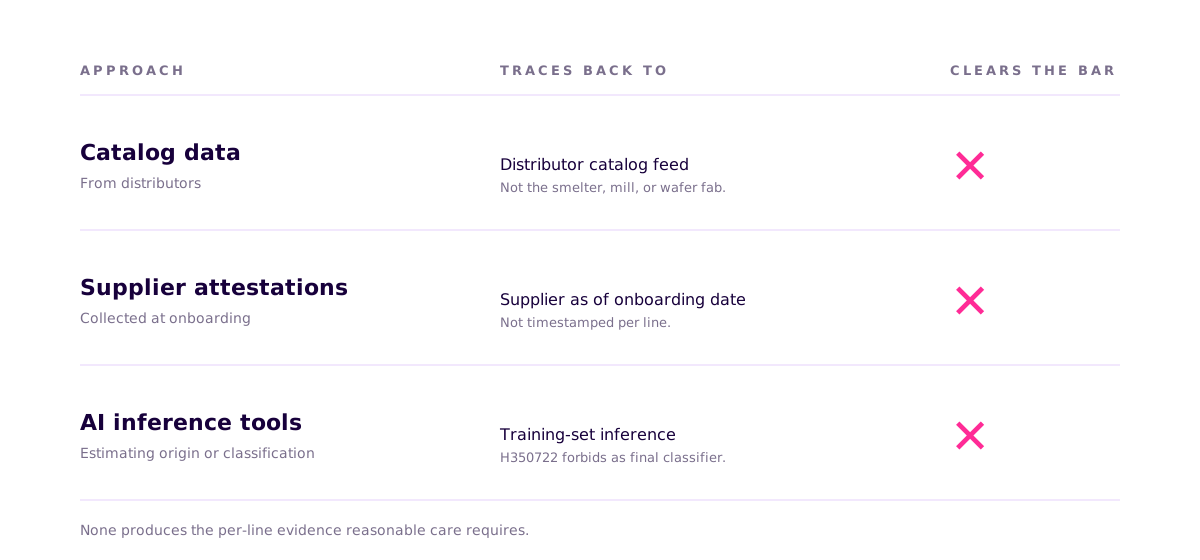
Most electronics importers today rely on catalog data, supplier attestations at onboarding, and AI tools that estimate origin by inference. Each stops short of the smelter, the mill, or the wafer fab. H350722 closed the door on AI as final classifier.
How Sluicebox is approaching the cascade.
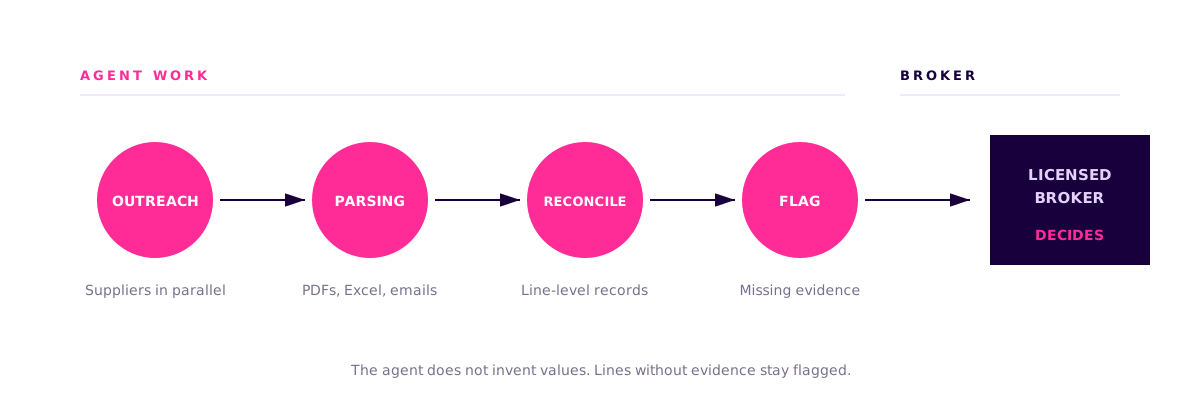
Sluicebox runs an AI agent in the space H350722 leaves open. It pings suppliers, parses responses into a cascade back to the smelter or mill, reconciles data line by line, and flags missing evidence for a broker.
The agent does not invent values, so lines without evidence stay flagged. What scales is collection and validation. The broker decides.
The complaints filed in 2024 and 2025 are still under seal.
First Brands' whistleblower filed in 2022. The case surfaced four years later, the typical seal lag. Complaints filed in 2024 and 2025 are still inside DOJ.
In February 2026 the Supreme Court struck down the IEEPA emergency tariffs. Section 232, 301, UFLPA, and anti-dumping duties survived. The regimes that demand primary-source evidence per line now carry the full enforcement weight.
Importers that build the cascade have time. Importers that do not will read about a peer in the next First Brands press release.
Part 2: the cascade in practice.
Sources
US Department of Justice Office of Public Affairs, Perfectus Aluminum press release, May 12 2026.
US Department of Justice Office of Public Affairs, Ceratizit USA LLC press release, December 2025.
Bloomberg, "First Brands Hit by $286 Million Claim for Alleged Tariffs Fraud," May 26 2026.
US Customs and Border Protection, CSMS #55424218.
US Customs and Border Protection, Headquarters Ruling H350722, 16 January 2026. https://rulings.cbp.gov/ruling/H350722
US Department of Homeland Security, UFLPA Strategy 2025 Update, August 2025.
European Commission DG TAXUD, CBAM Implementing Acts, 17 December 2025.
19 USC §1592, Penalties for fraud, gross negligence, and negligence.
Learning Resources, Inc. v. Trump, US Supreme Court, 20 February 2026.
About Sluicebox
Sluicebox is the Supply Chain Intelligence layer for the electronics industry — a Dynamic LCA engine designed specifically for semiconductor and electronics manufacturers, suppliers, and brands. Sluicebox automates and scales product-level carbon footprint (PCF) calculations and reporting across complex global supply chains, delivering real-time, ISO-compliant, and audit-ready carbon data for over 99% of electronic components worldwide.
Developed by engineers and scientists from NASA, Amazon, and Uber, Sluicebox empowers organizations to identify emissions hotspots, ensure regulatory compliance, and build trusted sustainability disclosures — eliminating the cost and complexity of manual life cycle assessments.
More news
 Industry Analysis
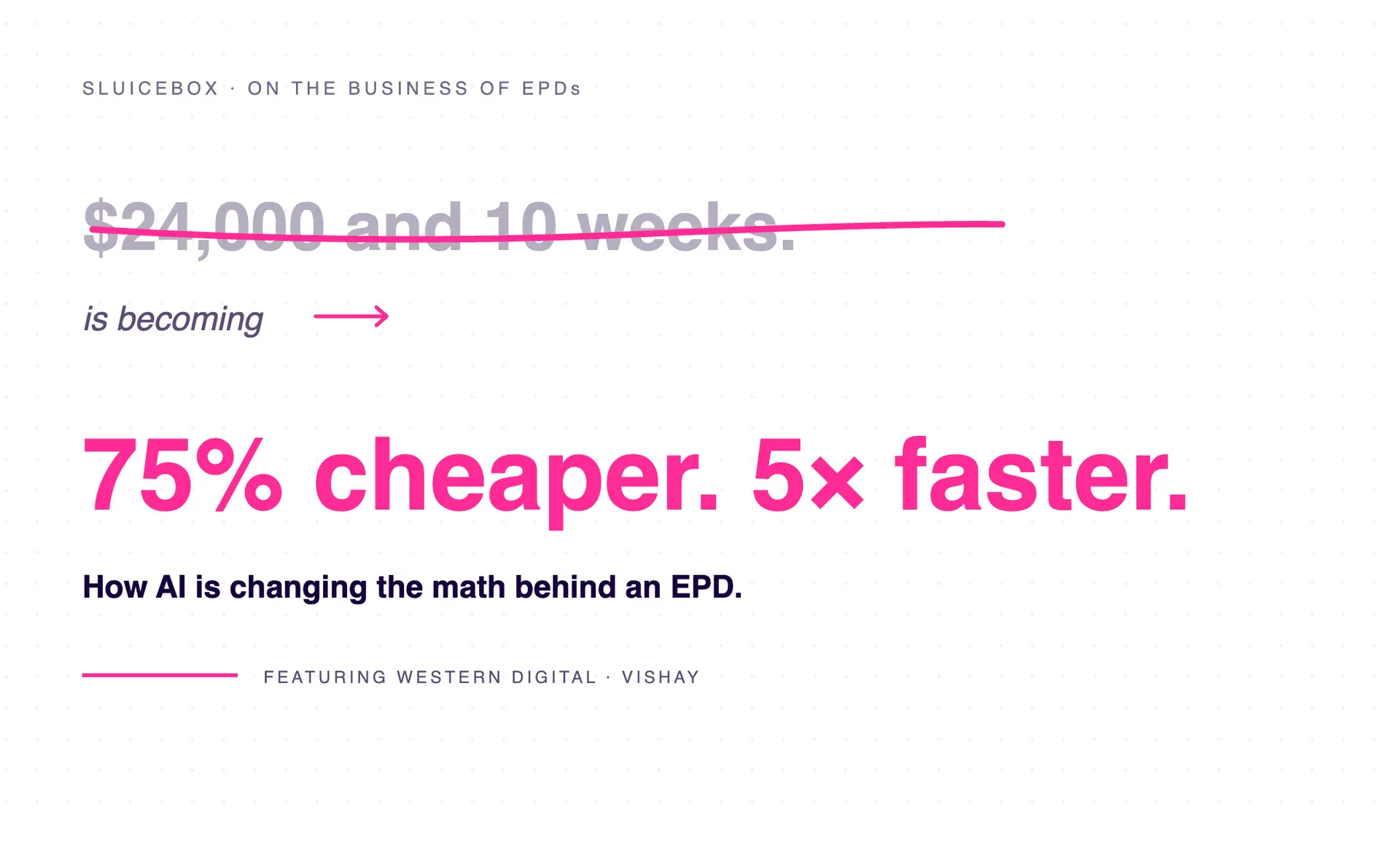
An EPD costs $24,000 and ten weeks. AI is changing the math.
 Miguel Altamirano5 min readJune 10, 2026
 Press Coverage
TÜV SÜD evaluates AI-based LCA software
 TÜV SÜD10 min readNovember 26, 2025
 AI & Engineering
Distance From the Outcome: Why AI Threatens Some and Supercharges Others
 Adrien Brault12 min readFebruary 4, 2026