Bosch wants a carbon number with every RFQ. TSMC wants it verified by 2026.
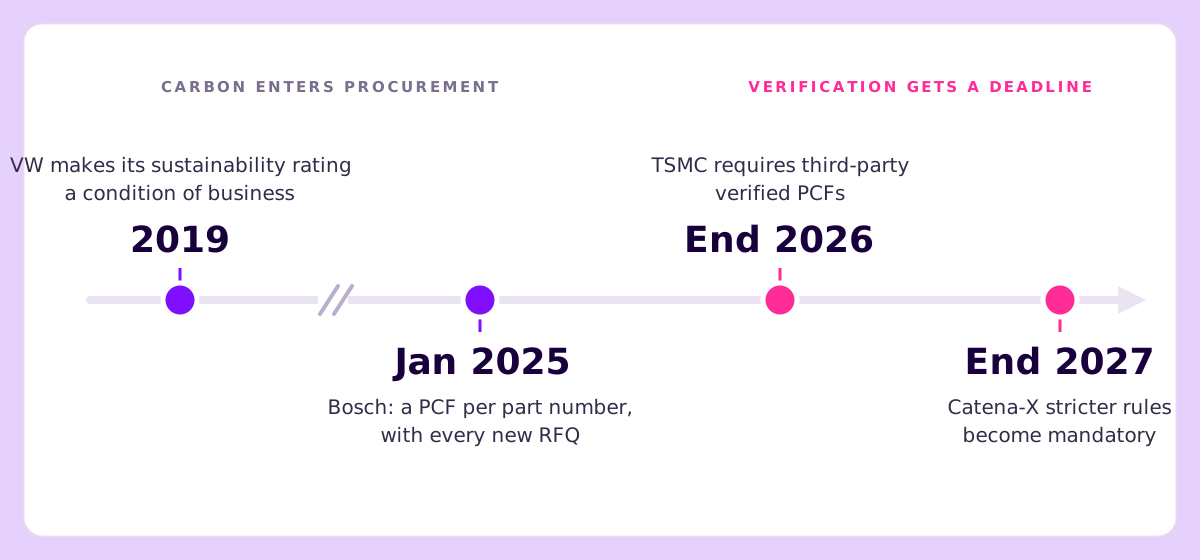
Carbon stopped being a reporting exercise in electronics. Since January 2025, Bosch requires a product carbon footprint per part number with every RFQ, and data that arrives after the bid is not considered. TSMC requires third-party verified PCFs by the end of 2026 and Catena-X's stricter rules follow in 2027.

Miguel Altamirano
Go-to-Market, Sluicebox
Published
July 13, 2026
Carbon stopped being a reporting exercise in electronics. It is now bid data, shown next to price and stock.
Key takeaways
- Bosch requires a product carbon footprint per part number with every new RFQ since January 2025. Data that arrives after the bid is not considered in sourcing.
- Buyers filter rather than pay: fewer than 15% accept a premium of around 10% for low-carbon materials, but 36% say they would leave a supplier that misses their sustainability expectations.
- Carbon data now appears where engineers pick parts. An estimate already separates a component from the majority showing nothing.
- The verification deadlines are set: TSMC requires third-party verified PCFs by end of 2026, and Catena-X's stricter rules become mandatory in 2027. Estimates are the starting rung, not the destination.
In January 2025, Bosch added a new requirement for suppliers quoting into its automotive divisions: send the product carbon footprint of the part, at part-number level, together with the price. If the data comes in after the bid, it does not count in the sourcing decision.
So a quote to Bosch now needs a price, a lead time, a quantity, and a CO2e number. Without the CO2e number, the bid is incomplete.
The same request is coming from every direction
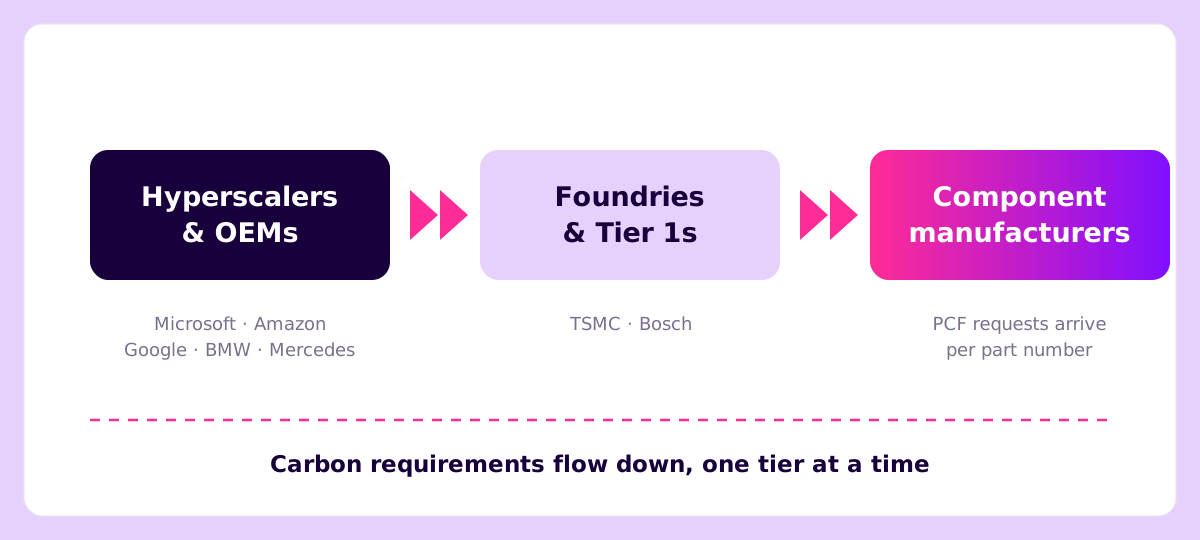
Bosch is not alone. BMW's supplier code calls CO2e compliance "a decisive criterion for us in the process of selecting our suppliers." Mercedes-Benz will not sign new contracts with suppliers who decline its Ambition Letter; almost 86% of its production-material suppliers have signed it.
It is the same story outside automotive. TSMC added carbon performance to its supplier selection criteria in 2025 and requires third-party verified PCFs from its major suppliers by the end of 2026. Microsoft, Amazon and Google put emissions requirements in their supplier codes, and that lands on the desk of the same component makers.
And no, buyers are not paying extra for it. Fewer than 15% of steel, aluminum and copper customers accept a premium of around 10% (McKinsey 2024). But 36% of B2B buyers say they would leave a supplier that misses their sustainability expectations (Bain 2024). Missing data gets you excluded. A lower number rarely wins the deal by itself.
Answering is expensive. So most suppliers don't.
Here is the problem for the manufacturer: a traditional LCA takes weeks per product, and the requests come in per part number, per customer. That does not scale.
Infineon decided to get ahead of it and has published per-product, cradle-to-gate PCFs since June 2024, citing "the growing number of customers who want to increase transparency." Most of the industry has not: nearly 10,000 companies hold science-based targets, and about 2% of suppliers have ever reported a product-level carbon footprint.
So buyers are asking for data that, in most cases, does not exist yet.
The first answers showed up in search results
Engineers pick components in distributor search engines and BOM tools, comparing availability, price and specs. That is where carbon data is showing up first.
Catena-X wrote its PCF Rulebook to "allow for part and supplier selection." IMDS, the automotive material-declaration system, added PCF fields. In September 2025, per-MPN kgCO2e went live in ECIA's TrustedParts.com BOM tool, calculated by Sluicebox and shown next to the manufacturer name. The big storefronts still show RoHS and REACH flags, and nothing on carbon.
These first numbers are estimates. And right now, having an estimate at all puts a part ahead of the majority, which show nothing.
The gates have dates
An estimate is a good start. It will not be enough. TSMC wants third-party verification by the end of 2026. Catena-X's transition period ends in 2027. Bosch says PCF certification is "currently not mandatory," which usually means: not yet.
Every product line sits somewhere on this ladder: no data, an estimate a buyer can already see, your own PCF, and a number that is ISO-aligned, auditable, and third-party verified. The deadlines above decide how fast you need to move up.
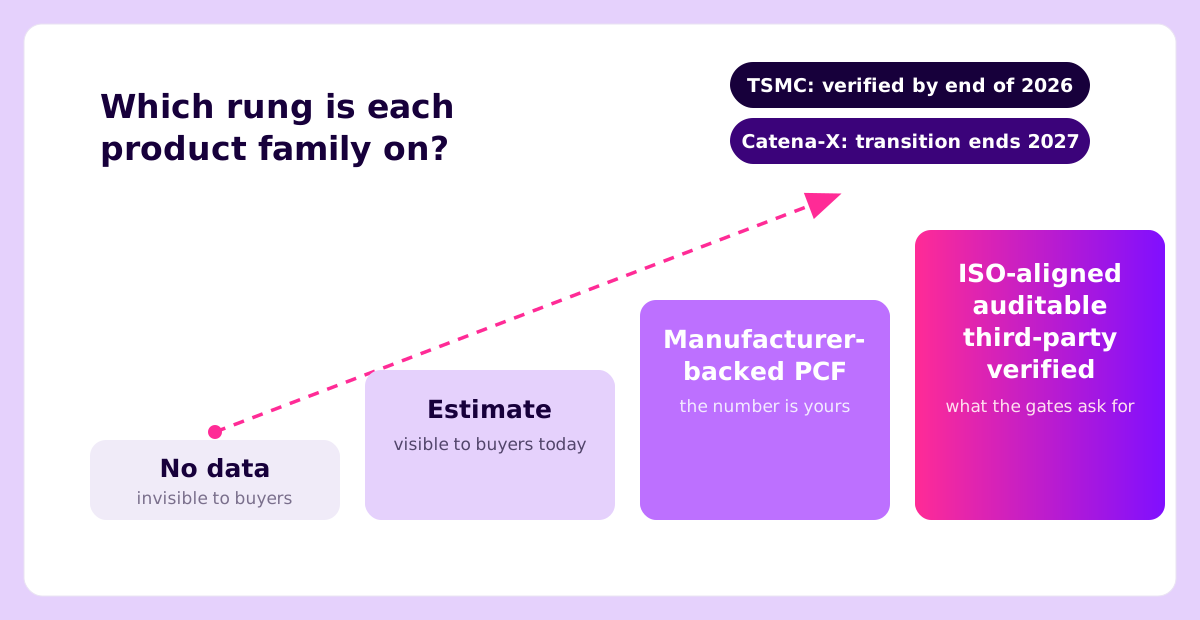
If you make components, the question this quarter is simple: which rung is each product family on? If you distribute them, the carbon column is still empty almost everywhere, and September 2025 showed how fast that changes.
The carbon number is already part of the bid. Most suppliers just haven't written theirs yet.
About the author
Miguel Altamirano leads Go-to-Market at Sluicebox. He brings a background in SAP supply chain systems and specializes in product carbon footprint methodology, LCA automation for electronics manufacturers, and regulatory compliance across CSRD, ESPR, CBAM, and Section 232. He works with electronics OEMs, distributors, and component manufacturers on BOM-level Scope 3 carbon programs. Connect with Miguel on LinkedIn.
Sources
Bosch, PCF FAQ for suppliers, 2025.
BMW Group, Supplier Code of Conduct v3.0, 2022.
Mercedes-Benz, Ambition 2039 release, 2020; Sustainability Report 2022.
TSMC ESG, New Business Collaboration Standards, 2024.
Microsoft Supplier Code of Conduct; Amazon Supply Chain Standards Manual, 2024; Google Supplier Code of Conduct, 2025.
McKinsey, Global Materials Perspective, 2024.
Bain & Company, B2B buyer survey, 2024.
Infineon, Product Carbon Footprint release, 2024.
Catena-X, PCF Rulebook v4, 2025.
ECIA / TrustedParts.com, September 2025.
CDP / SBTi supplier reporting data via Sluicebox industry analysis, 2026.
About Sluicebox
Sluicebox is the Supply Chain Intelligence layer for the electronics industry — a Dynamic LCA engine designed specifically for semiconductor and electronics manufacturers, suppliers, and brands. Sluicebox automates and scales product-level carbon footprint (PCF) calculations and reporting across complex global supply chains, delivering real-time, ISO-compliant, and audit-ready carbon data for over 99% of electronic components worldwide.
Developed by engineers and scientists from NASA, Amazon, and Uber, Sluicebox empowers organizations to identify emissions hotspots, ensure regulatory compliance, and build trusted sustainability disclosures — eliminating the cost and complexity of manual life cycle assessments.
More news
 Industry Analysis
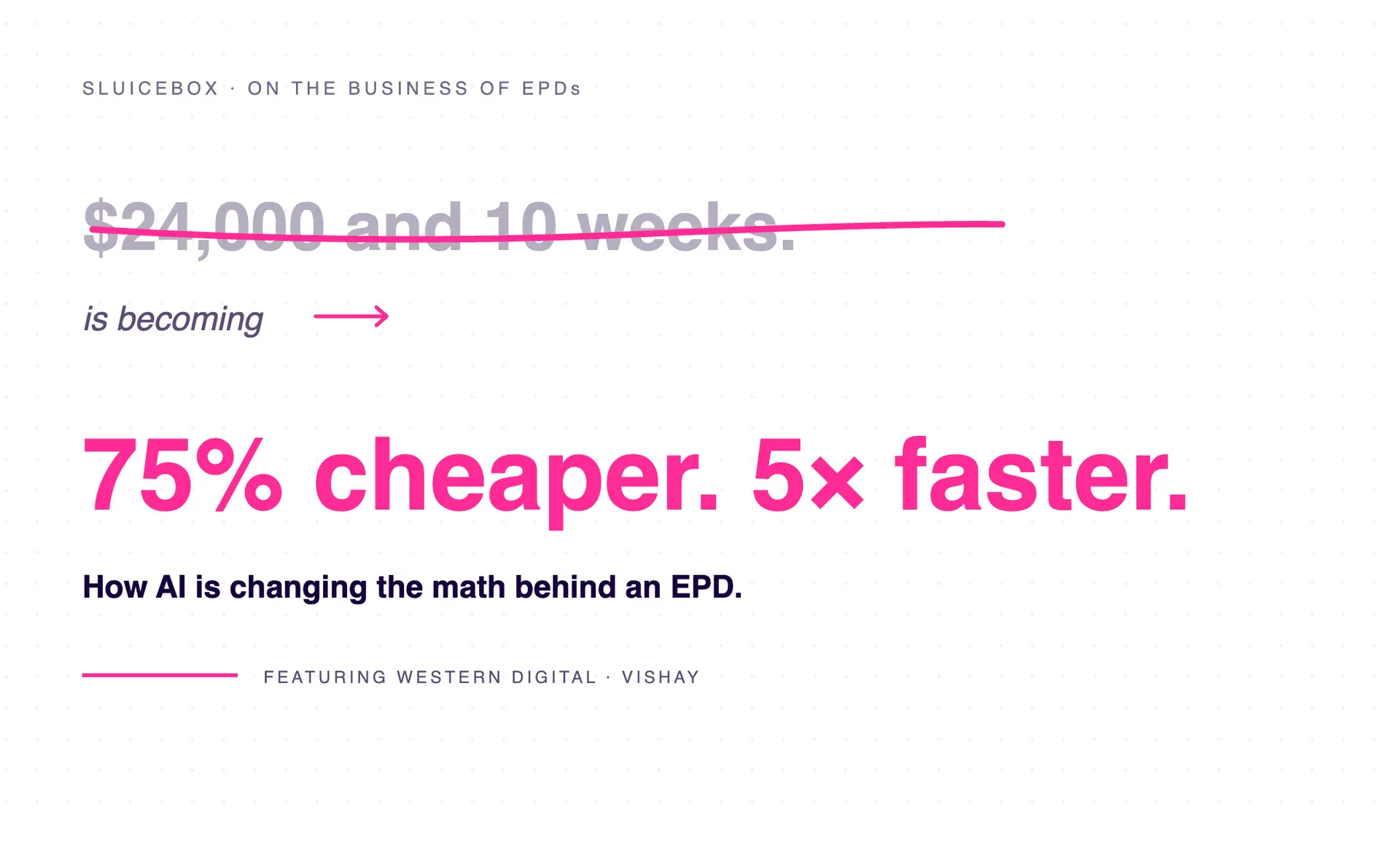
An EPD costs $24,000 and ten weeks. AI is changing the math.
 Miguel Altamirano5 min readJune 10, 2026
 Press Coverage
TÜV SÜD evaluates AI-based LCA software
 TÜV SÜD10 min readNovember 26, 2025
 AI & Engineering
Distance From the Outcome: Why AI Threatens Some and Supercharges Others
 Adrien Brault12 min readFebruary 4, 2026