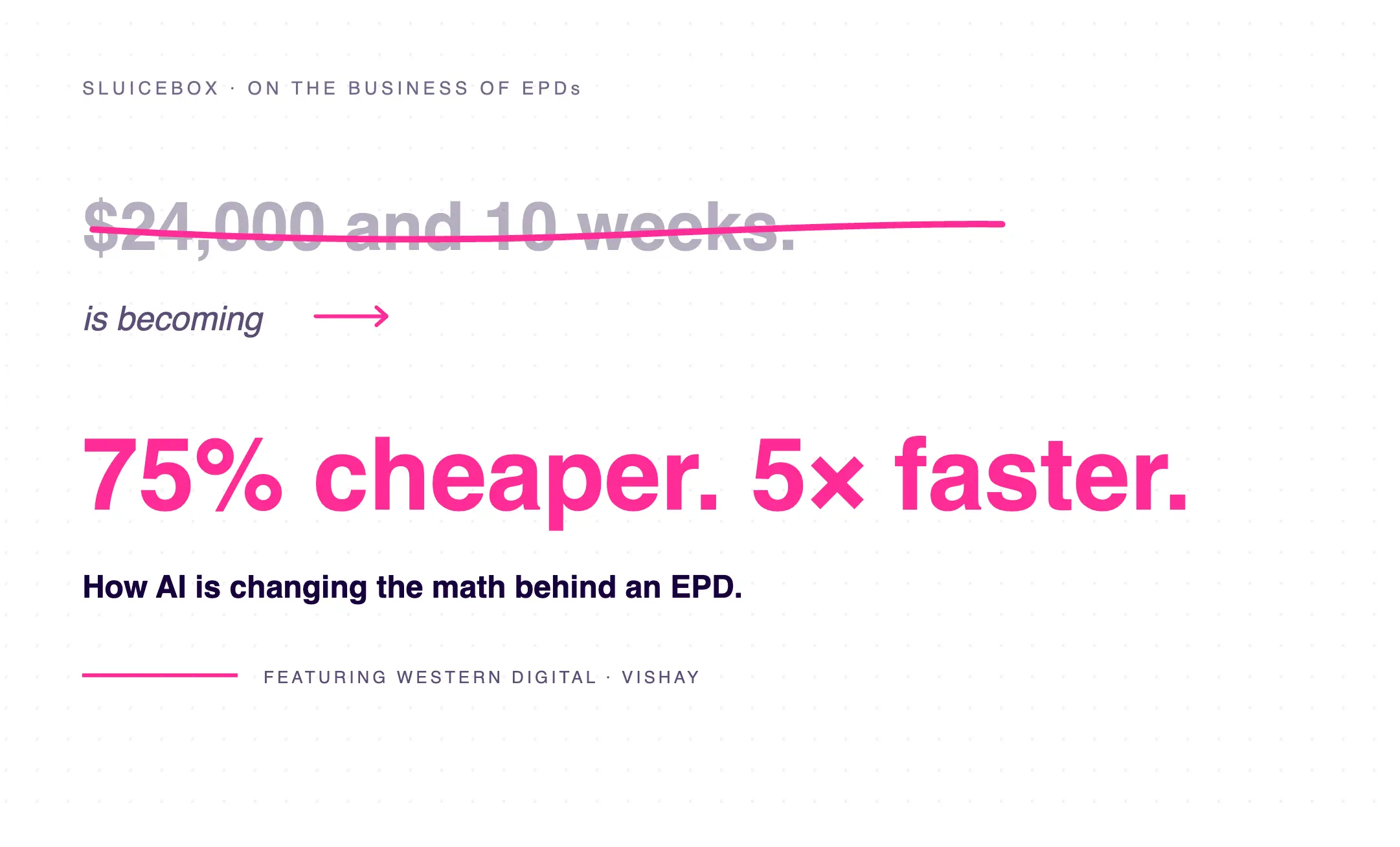
An EPD costs $24,000 and ten weeks. AI is changing the math.
One EPD costs $24,000 and 24 person-days, flat for seven years. AI-driven workflows cut inventory time 80 to 90% and mapped a 5,600-component portfolio in seconds.

Miguel Altamirano
Go-to-Market, Sluicebox
Published
June 10, 2026
Inside the price of one EPD, and what AI removes from the workflow.
Five years ago, an Environmental Product Declaration was a sustainability project. Today it gates revenue.
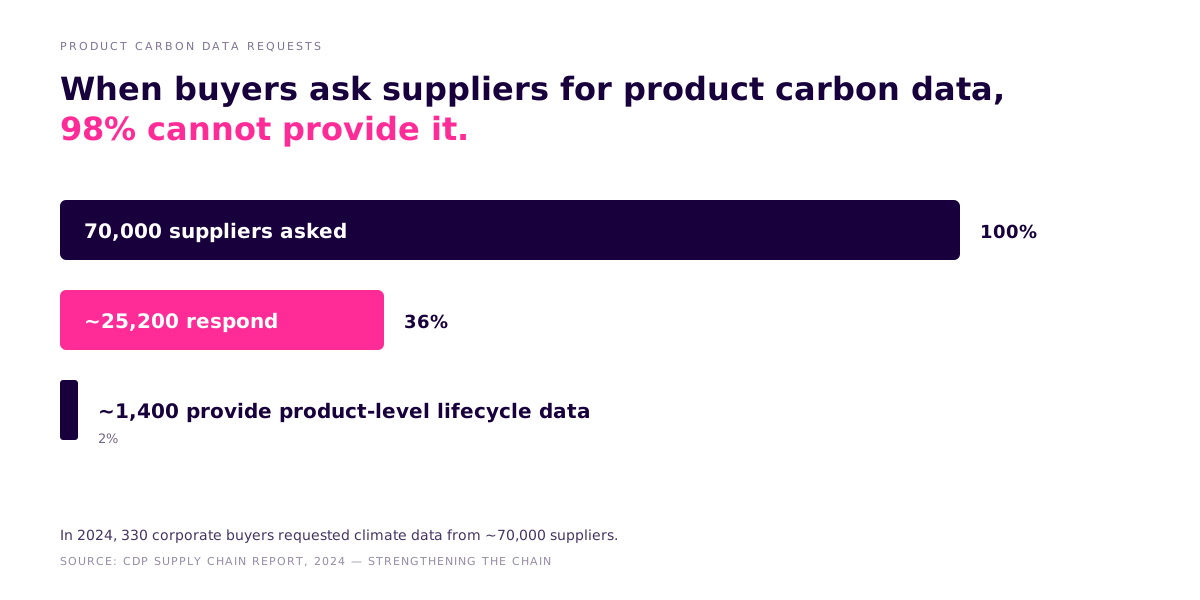
The shift started with buyers. In 2025, 330 corporate buyers asked 70,000 suppliers for product carbon data, a record. EcoVadis's 2024 Procurement Barometer found over 70% of procurement teams now name sustainability among their top buying criteria. Building rating systems like BREEAM and LEED reward projects that include verified EPDs. Manufacturers with EPDs win specifications; those without lose them.
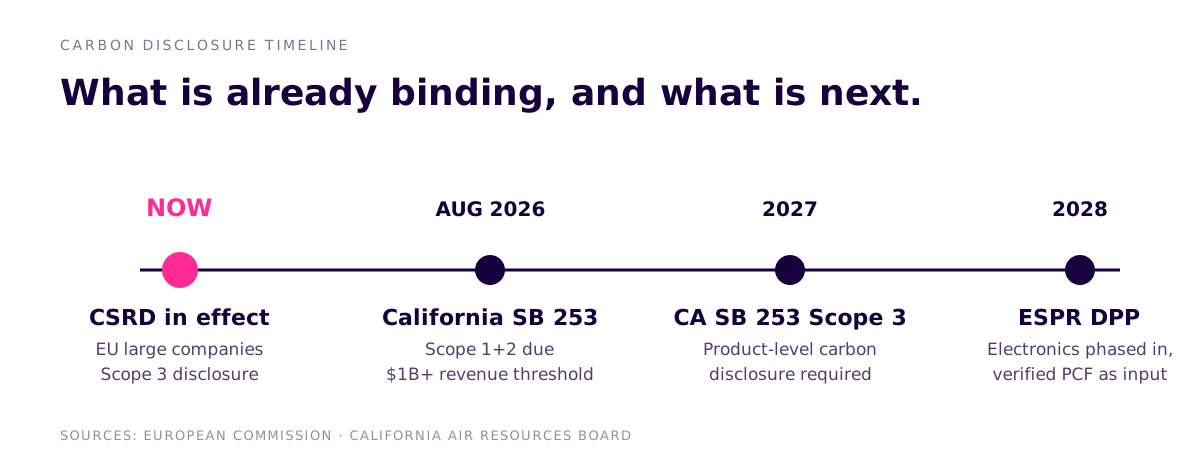
Regulation is intensifying. CSRD requires large EU companies to disclose Scope 3 emissions, including the products they buy and sell. ESPR phases Digital Product Passports into electronics from 2028. California SB 253 covers companies over $1B doing business in the state, with Scope 1+2 disclosure due August 2026 and Scope 3 in 2027.
Most suppliers have not kept up. When buyers asked for product-level carbon data in 2024, only 2% delivered. The 2% that did are already pulling ahead, qualified into specifications and prepared for the deadlines ahead.
The question is no longer whether to publish EPDs, but how to do so at a pace and cost the business can carry.
$24,000 per EPD. Flat for seven years.
One EPD costs $13,000 to $41,000 and takes about 24 person-days of expert work. That came from a 2017 survey of 15 EPD program operators. A 2024 study of Danish state subsidy invoice data found the median almost unchanged at $24,037. Seven years, no movement.
Those numbers cover external consultant time only. Internal hours for supplier chase, BOM cleanup, and review cycles are usually larger. A 20-product program runs into hundreds of thousands of dollars and a multi-year timeline.
The bottleneck is data, not methodology.
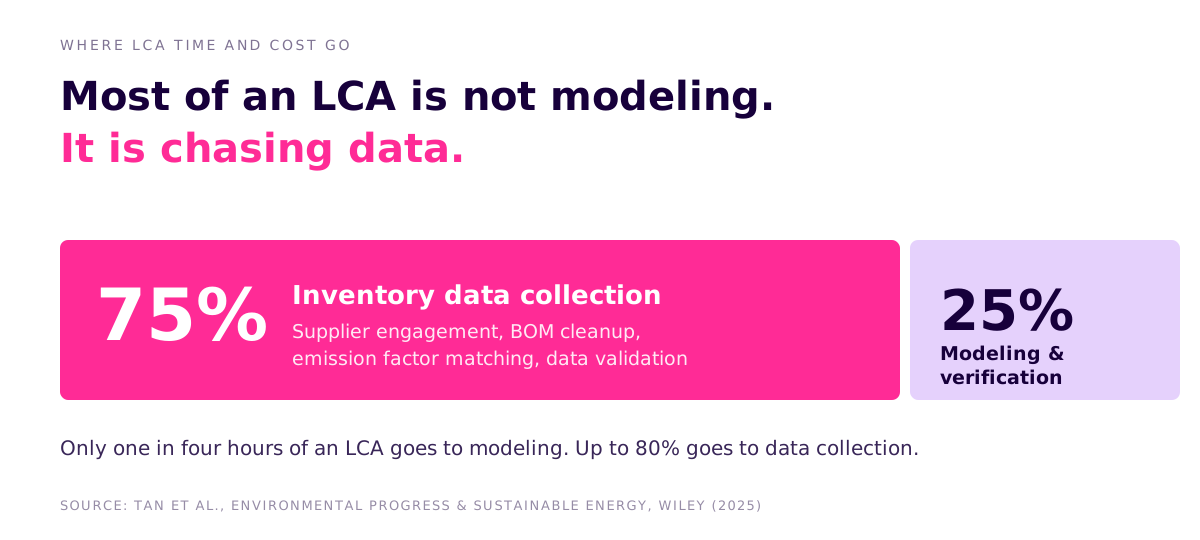
Most of the time is not spent modeling. It is spent chasing data. A 2025 peer-reviewed synthesis estimated that 70 to 80% of LCA time and cost sits in inventory data collection alone.
In electronics, the data resists collection. Bills of materials arrive with missing weights, ambiguous manufacturer names, and mismatched part numbers. So even Fraunhofer IZM, the German research institute behind the LCAs for Framework Laptop and Fairphone, supplements supplier BOMs with physical teardown, X-ray imaging, and component-level microscopy.
Then comes the wait for suppliers. Only 36% respond when asked for climate data, and only 2% provide anything at the product level.
The bottleneck is not methodology. It is the manual labor methodology has always required.
AI removes the manual labor, not the science.
Peer-reviewed work has shown that NLP-based BOM matching cuts LCA inventory time 80 to 90% versus manual processes. A 2025 whitepaper documents what that looks like at portfolio scale. Researchers from UT Austin, Western Digital, Vishay, and TTI co-authored it; TÜV SÜD independently verified the methodology. Western Digital had spent two years to collect 20% of its supplier data manually. With AI-driven LCAs, they mapped 100% of a 5,600-component portfolio in seconds, with 30% higher matching accuracy than manual workflows.
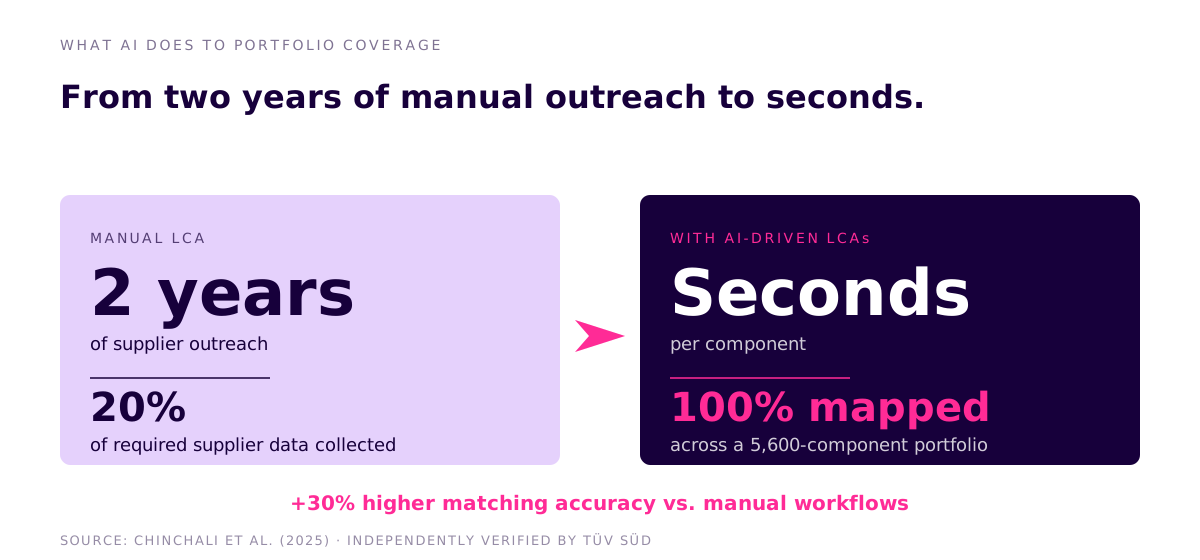
Three things shift inside the workflow.
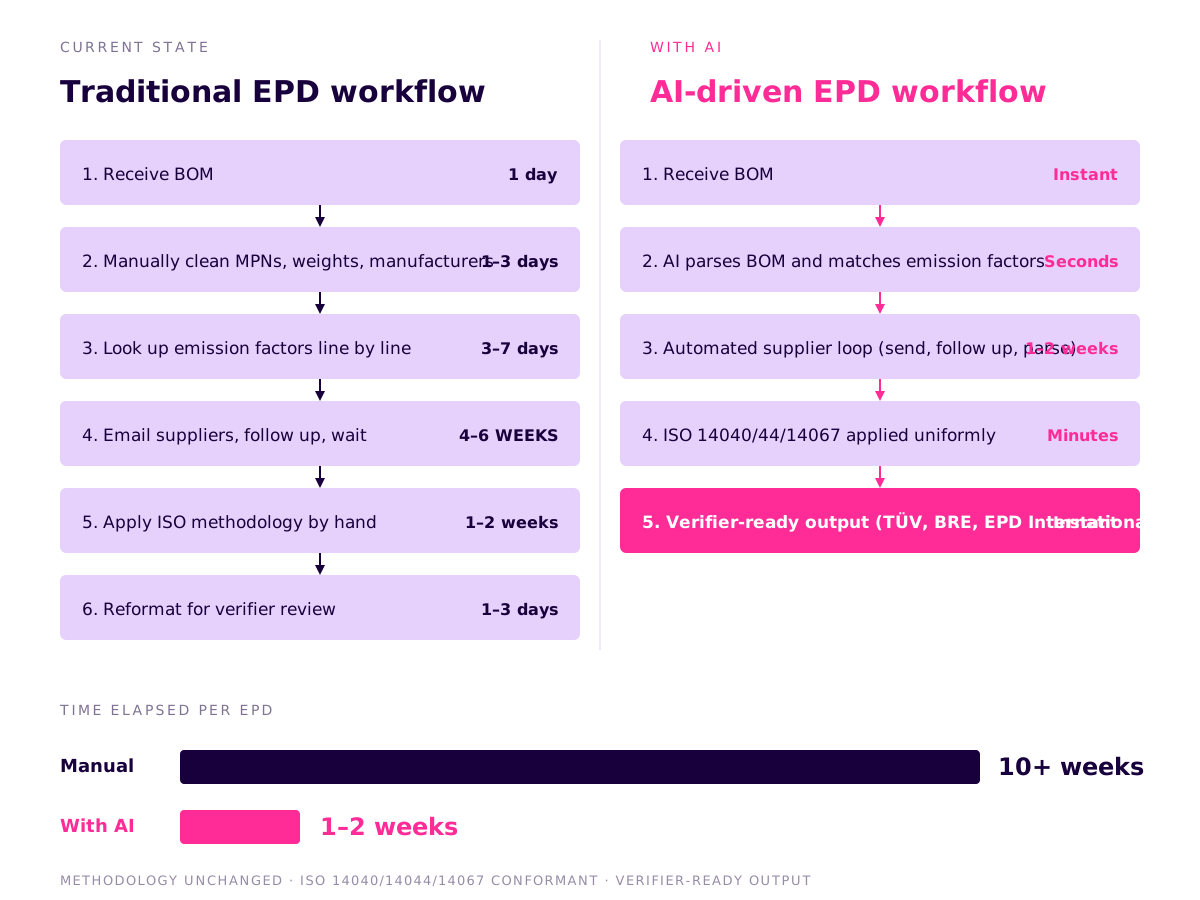
BOM parsing becomes seconds, with confidence scoring per match. Supplier requests run in the background, sending, following up, and parsing replies into the model. ISO methodology (14040, 14044, 14067) applies uniformly across the portfolio, with output formatted for verifiers (TÜV, BRE, EPD International) without a reformatting pass.
Sluicebox is building this for electronics manufacturers.
EPDs become a live data layer.
When one EPD takes one or two weeks instead of ten, and costs 75% less than the industry baseline, engineering reads carbon at design time, procurement compares suppliers on carbon as a routine input, and sales answers specifier carbon questions in days.
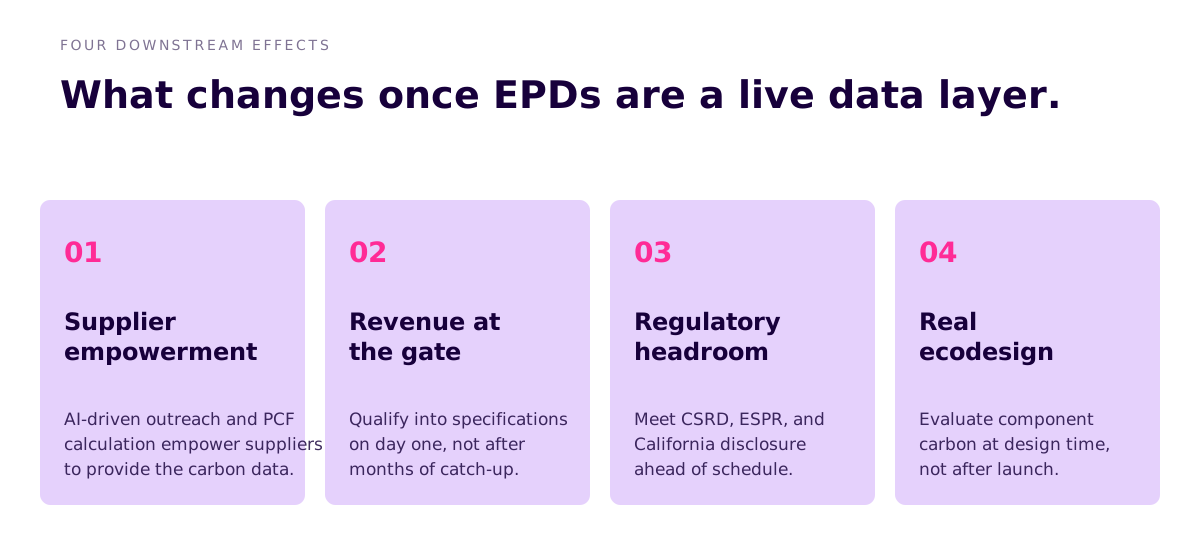
Manufacturers publishing EPDs quickly qualify for revenue their peers cannot reach, meet CSRD and ESPR with room to spare, and spend less per declaration than the industry baseline. That is the new baseline forming.
Sources
- CDP, Strengthening the Chain (2024)
- CDP, Corporate supply chain Scope 3 (2025)
- EcoVadis, Sustainable Procurement Barometer (2024)
- European Commission, Ecodesign for Sustainable Products Regulation (2025)
- Tasaki et al., International Survey of the Costs of Assessment for EPDs, Procedia CIRP (2017)
- Shobatake et al., How Much is the Cost of EPD? (2024)
- Tan et al., Uncertainty in inventories for LCA, Environmental Progress & Sustainable Energy, Wiley (2025)
- Fraunhofer IZM, Framework Laptop LCA (2022)
- Text-based algorithms for automating life cycle inventory analysis, Journal of Cleaner Production (2024)
- Chinchali et al., Precision and Scale in Electronic Carbon Data: Generative LCAs for Green BOMs (2025)
- Cooley alert, California SB 253 / SB 261 developments (2026)
- LEED / BREEAM EPD requirements
About Sluicebox
Sluicebox is the Supply Chain Intelligence layer for the electronics industry — a Dynamic LCA engine designed specifically for semiconductor and electronics manufacturers, suppliers, and brands. Sluicebox automates and scales product-level carbon footprint (PCF) calculations and reporting across complex global supply chains, delivering real-time, ISO-compliant, and audit-ready carbon data for over 99% of electronic components worldwide.
Developed by engineers and scientists from NASA, Amazon, and Uber, Sluicebox empowers organizations to identify emissions hotspots, ensure regulatory compliance, and build trusted sustainability disclosures — eliminating the cost and complexity of manual life cycle assessments.
More news
 Press Coverage
TÜV SÜD evaluates AI-based LCA software
 TÜV SÜD10 min readNovember 26, 2025
 AI & Engineering
Distance From the Outcome: Why AI Threatens Some and Supercharges Others
 Adrien Brault12 min readFebruary 4, 2026
 Press Coverage
C2MI and Sluicebox Announce New Partnership
 C2MI5 min readDecember 3, 2025