CBAM verification arrives in 2027. It audits the data you are generating right now.
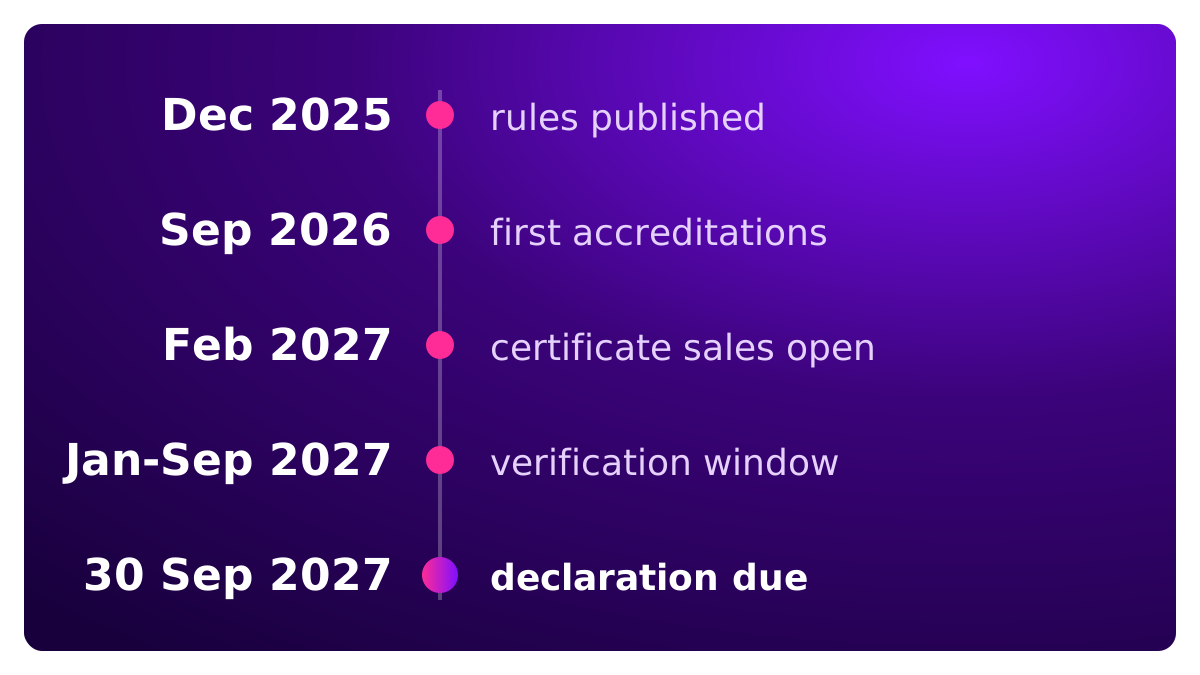
From 2027 every EU importer declaring actual emissions under CBAM needs a report from an accredited verifier. First accreditations are expected around September 2026, the first declaration is due 30 September 2027, and the first cycle audits 2026 data with a mandatory physical site visit at every installation.

Miguel Altamirano
Go-to-Market, Sluicebox
Published
July 28, 2026
From 2027, every EU importer that declares actual emissions under CBAM needs a verification report from an accredited verifier. The verifier market is forming on schedule: first accreditations are expected around September 2026. The first cycle audits 2026 data and requires a physical site visit at every installation.
Key takeaways
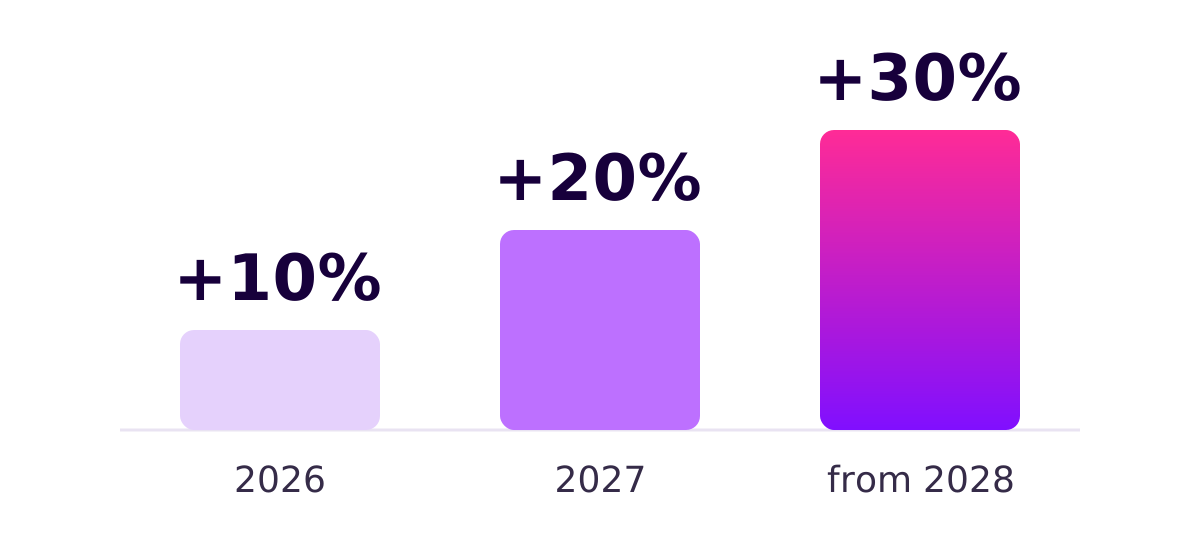
- Verification is mandatory for actual emissions values and unnecessary for default values. The catch sits in the price: defaults carry a legislated mark-up of 10% in 2026, 20% in 2027, and 30% from 2028.
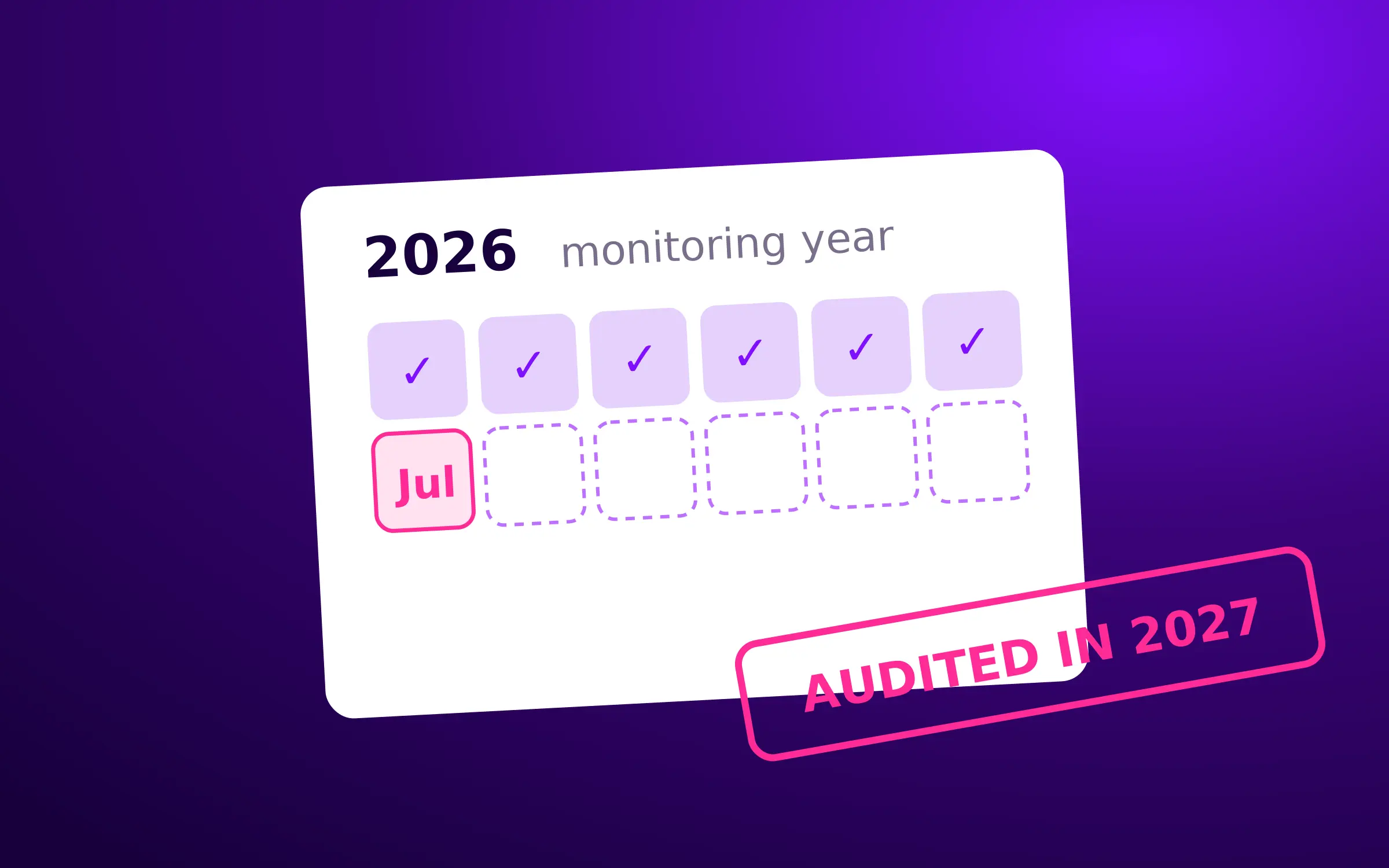
- First accreditations are expected around September 2026 and the first annual declaration, covering 2026 imports, is due 30 September 2027. Verification examines the 2026 monitoring year, so the data trail has to be built during 2026.
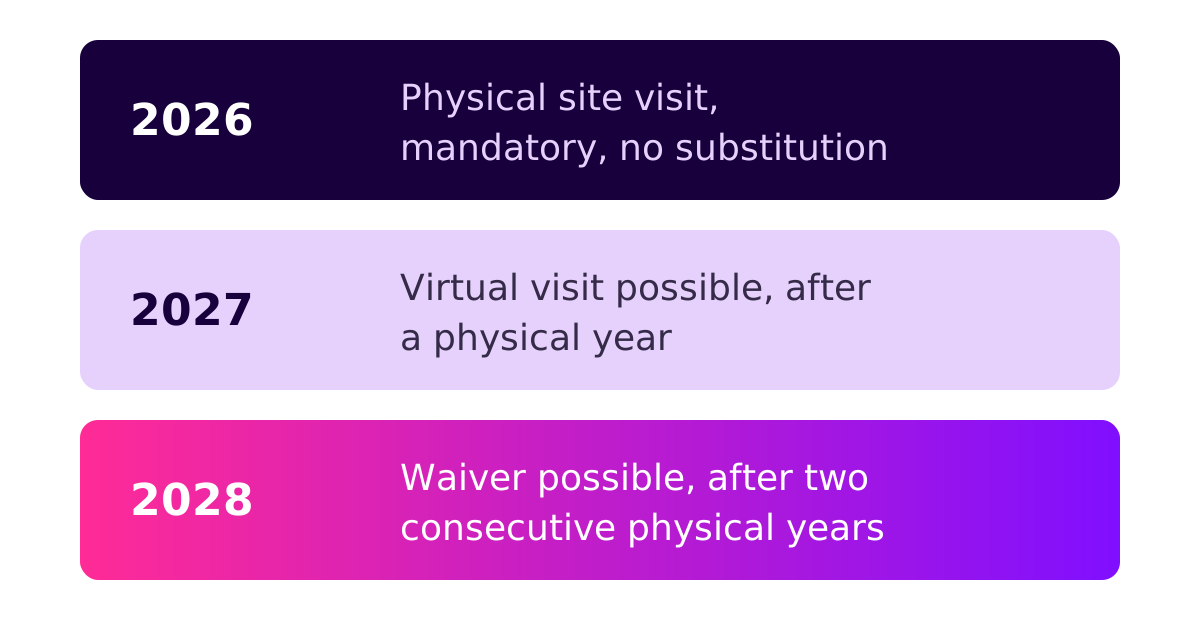
- The first verification cycle requires a physical site visit at every installation producing CBAM goods, with no substitution allowed. Virtual visits become possible in year two, waivers in year three.
- As of 30 June 2026, 24 EU accreditation bodies have agreed to offer CBAM accreditation, 9 are accepting applications, and 3 accept applicants from outside the EU.
In December 2025, the EU published the rulebook for verifying carbon emissions in imported goods. It reads like the EU ETS playbook: accredited verifiers, risk-based audits, reasonable assurance, materiality thresholds. There is one difference. The EU ETS had verifiers before it had obligations. CBAM has obligations first.
Imports of iron, steel, aluminium, cement, fertilisers, hydrogen and electricity have carried CBAM payment obligations since 1 January 2026. Certificate sales open on the Commission's central platform in February 2027. The first annual declaration, covering everything imported in 2026, is due 30 September 2027. Each declaration states embedded emissions per good, and every declaration built on actual emissions data must attach a verification report from an accredited CBAM verifier.
No verifier holds that accreditation today.
A market with a legislated start date
The accreditation machine started moving late. The two regulations that define who can verify and how, Delegated Regulation (EU) 2025/2551 and Implementing Regulation (EU) 2025/2546, were published on 22 December 2025. National accreditation bodies spent the first half of 2026 opening application schemes. The Commission's own state-of-play, published 30 June 2026, counts 24 bodies that agreed to offer CBAM accreditation and 9 ready to receive applications: Germany, Belgium, Bulgaria, Finland, Italy, Luxembourg, the Netherlands, Spain and Sweden. Three of them, Accredia, RvA and Swedac, take applications from verifiers based outside the EU.
Verification bodies accredited under the EU ETS form the incoming pool, and the large certification houses are already in process. TÜV NORD states publicly that it is seeking CBAM accreditation. The Commission expects the first accreditations around September 2026, and accredited verifiers can register in the CBAM Registry from 1 September 2026.
First verifiers ready in the autumn of 2026. Declaration deadline 30 September 2027. A well-prepared installation gets through verification in about three months, and every installation verified for 2026 data must receive a physical site visit: a walk-through, process observation, document review, data sampling. For supply chains running through China, India, Türkiye, the UAE and the Gulf, verifier calendars fill from the site-visit logistics alone. The regulation offers relief later: a virtual visit is allowed in year two if a physical visit happened the year before, and a full waiver in year three after two consecutive physical visits.
The fallback is priced to hurt
An importer who cannot get verified data has one legal alternative: the Commission's default values. Defaults require no verifier and no supplier cooperation, and they are calibrated to be expensive. The default carries a mark-up over the calculated benchmark of 10% in 2026, 20% in 2027, and 30% from 2028 (fertilisers sit at 1%).
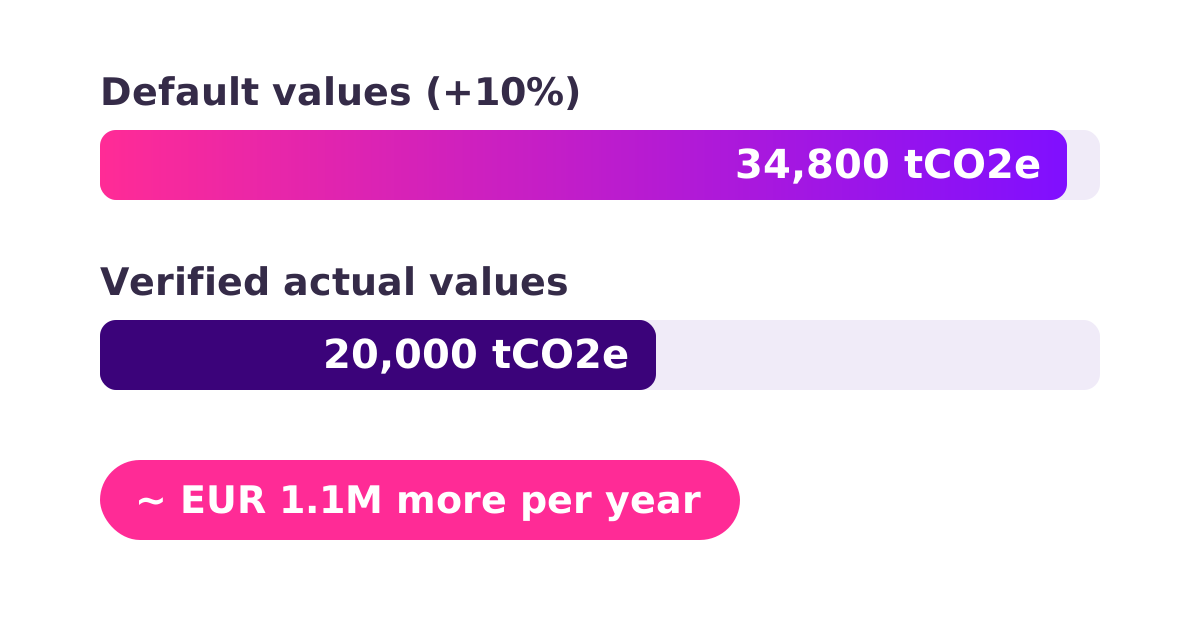
Take an importer bringing in 10,000 tonnes of Chinese blast-furnace steel a year. On default values, that steel counts as 3.167 tonnes of CO2 per tonne, plus the 10% mark-up: certificates for about 34,800 tonnes of CO2. The same steel measured and verified typically comes in near 2.0: certificates for 20,000 tonnes. At the Q2 2026 certificate price of €75.28, the importer using defaults pays about €1.1 million more per year. Verifying that one installation costs €5,000 to €50,000 by market estimates.
Aluminium producers face the sharpest version. Their installations emit perfluorocarbons alongside CO2, which pushes them toward the expensive end of verification. Their customers have been asking for a carbon number with every RFQ since 2025; CBAM now asks for it under customs law.
The audit trail has to exist before the auditor arrives
Verification under CBAM examines the year that already happened. The verifier checks the installation's monitoring plan, activity data, emission factors, calculation methodology and completeness for the full reporting period, against a materiality threshold of 5% per good. A producer who starts assembling data in 2027 is verifying a 2026 that was never instrumented.
The reach extends past the installation's own gate. Where a complex good uses precursors declared at actual values, the precursor's emissions need their own accredited verification, or the whole product falls back to defaults. Most suppliers have never produced verified emissions data; the collection programs that work treat that as the starting condition.
The EPD world already priced this in: a single verified declaration costs $24,000 and ten weeks when the underlying data is assembled by hand. Producers whose 2026 emissions data is structured, complete and traceable will clear verification in one pass. The rest pay in repeat findings, extended engagements, or defaults.
What to do before the end of 2026
For importers: map which installations in your supply chain will use actual values, and get verifier engagements moving in 2026, before the first accreditations land and calendars close. For producers selling into the EU: your 2026 monitoring plan is the asset under audit, and ISO-conformant, traceable system output is what turns a verification from a project into a review.
CBAM expands in 2028. The Council agreed its position in June 2026 to extend CBAM to roughly 180 downstream product lines, including fasteners, electric motors and transformers. If adopted, the verifier shortage reaches electronics in 2028.
Verifier capacity for 2027 is being booked now.
About the author
Miguel Altamirano leads Go-to-Market at Sluicebox. He brings a background in SAP supply chain systems and specializes in product carbon footprint methodology, LCA automation for electronics manufacturers, and regulatory compliance across CSRD, ESPR, CBAM, and Section 232. He works with electronics OEMs, distributors, and component manufacturers on BOM-level Scope 3 carbon programs. Connect with Miguel on LinkedIn.
Sources
European Commission, Taxation and Customs Union, CBAM verification, 2026.
European Commission, State-of-play: CBAM accreditation, 30 June 2026.
European Commission, Price of CBAM certificates, 2026.
European Commission, Council agreement strengthening CBAM, 12 June 2026.
Commission Delegated Regulation (EU) 2025/2551, accreditation of CBAM verifiers.
Commission Implementing Regulation (EU) 2025/2546, verification principles and materiality.
Commission Implementing Regulation (EU) 2025/2083, declaration deadlines.
Commission Implementing Regulation (EU) 2025/2621, default values and mark-ups.
TÜV NORD, CBAM services, 2026.
Carboneer, Verification under CBAM: key learnings and guidance, March 2026.
CBAM Guide, Verification for importers, 2026.
About Sluicebox
Sluicebox is the Supply Chain Intelligence layer for the electronics industry — a Dynamic LCA engine designed specifically for semiconductor and electronics manufacturers, suppliers, and brands. Sluicebox automates and scales product-level carbon footprint (PCF) calculations and reporting across complex global supply chains, delivering real-time, ISO-compliant, and audit-ready carbon data for over 99% of electronic components worldwide.
Developed by engineers and scientists from NASA, Amazon, and Uber, Sluicebox empowers organizations to identify emissions hotspots, ensure regulatory compliance, and build trusted sustainability disclosures — eliminating the cost and complexity of manual life cycle assessments.
Frequently Asked Questions
Is there a Q1 2027 or April 2027 verification deadline?
No. Declarations under the definitive regime are annual. The first one, covering 2026 imports, is due 30 September 2027, and verification reports for actual values must exist by then. February 2027 matters for a different reason: certificate sales open.
Who can verify CBAM emissions?
Verifiers accredited for CBAM by an EU national accreditation body under Delegated Regulation (EU) 2025/2551, registered in the CBAM Registry. Verifiers based outside the EU can qualify through the three accreditation bodies currently accepting third-country applicants.
Do default values need verification?
No. Verification applies to actual values. Defaults trade the verification requirement for a mark-up: 10% in 2026, 20% in 2027, 30% from 2028.
What does verification cost?
No regulator rate card exists. Market estimates run €5,000 to €50,000 per installation depending on complexity, with aluminium and fertiliser complexes at the top of the range and 15 to 25% volume discounts for multi-installation engagements.
More news
 Industry Analysis
An EPD costs $24,000 and ten weeks. AI is changing the math.
 Miguel Altamirano5 min readJune 10, 2026
 Press Coverage
TÜV SÜD evaluates AI-based LCA software
 TÜV SÜD10 min readNovember 26, 2025
 AI & Engineering
Distance From the Outcome: Why AI Threatens Some and Supercharges Others
 Adrien Brault12 min readFebruary 4, 2026