40 teardowns · 6 new every week

You don't need to send us a BOM. We already built one.

We pick a company's flagship product, read everything public about it, datasheets, teardowns, labels, patents, filings, and reconstruct the bill of materials. Then we run the carbon footprint. No data from you. No NDA. No kickoff call.

Free. Yours whether we ever speak or not.

Always unlockedVehicles & Heavy Machinery
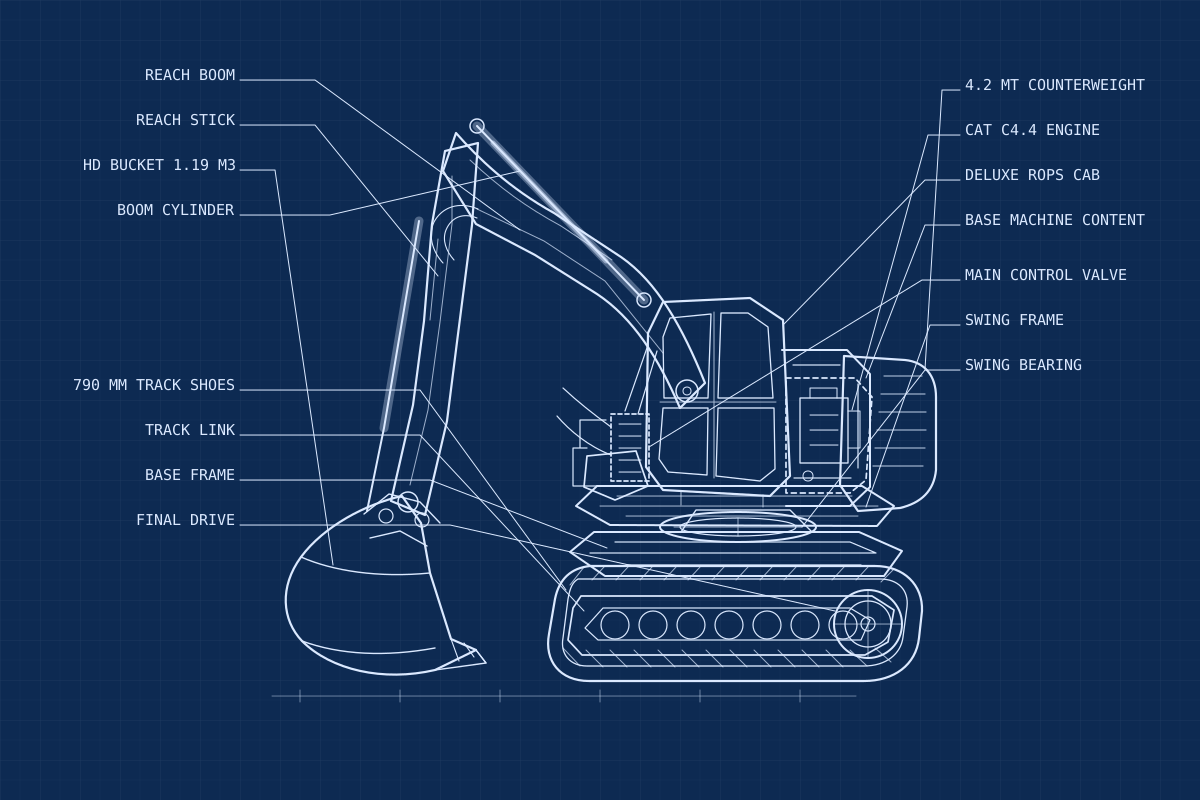
Caterpillar 320 excavator blueprint
Caterpillar
320 excavator
47 components
resolved

Two passes. The second one has you in it.

The first pass — free, already done
  • A bill of materials for the product, reconstructed from public documents
  • Component-level footprint, with the source document and a confidence figure on every line
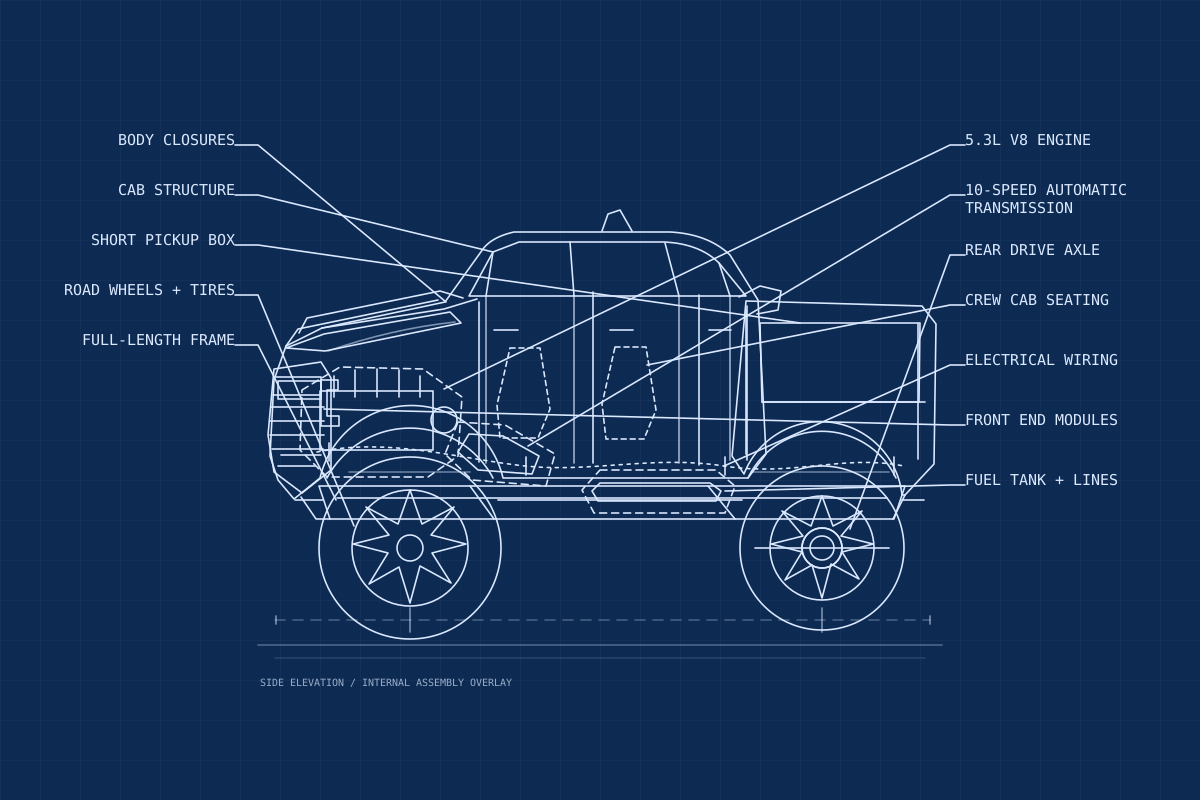
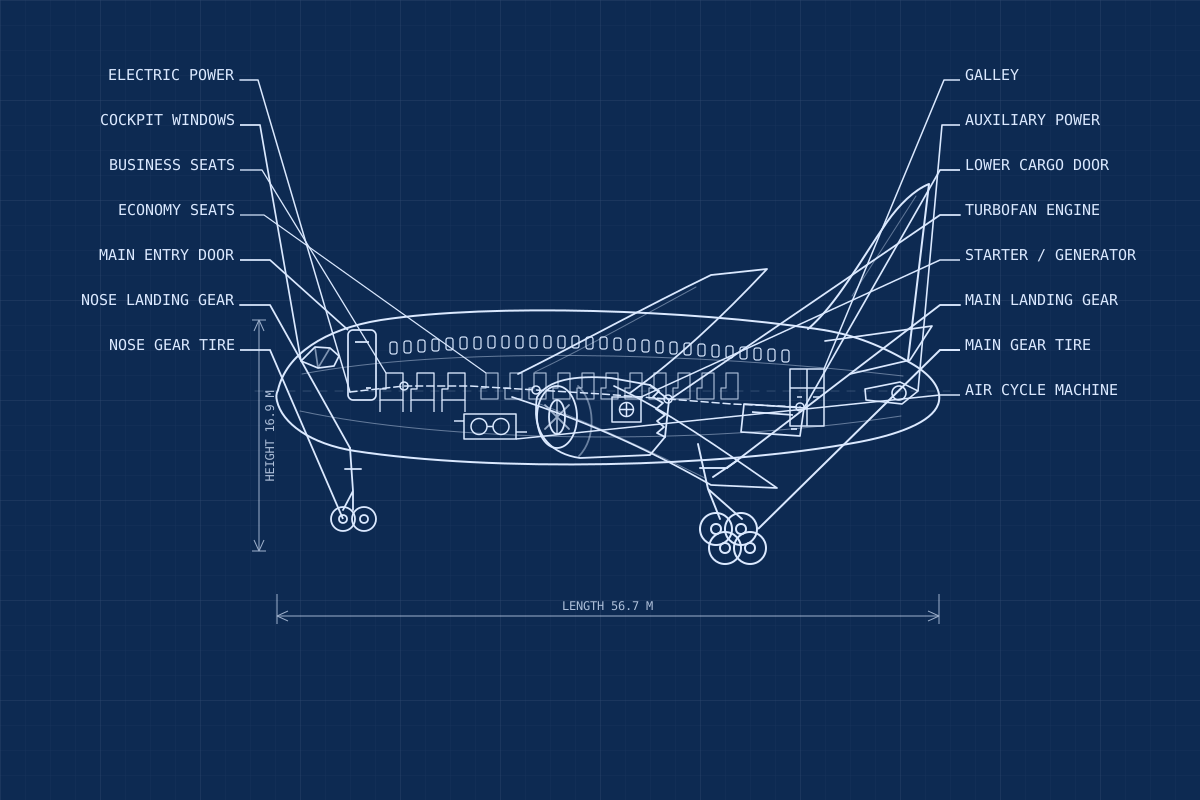
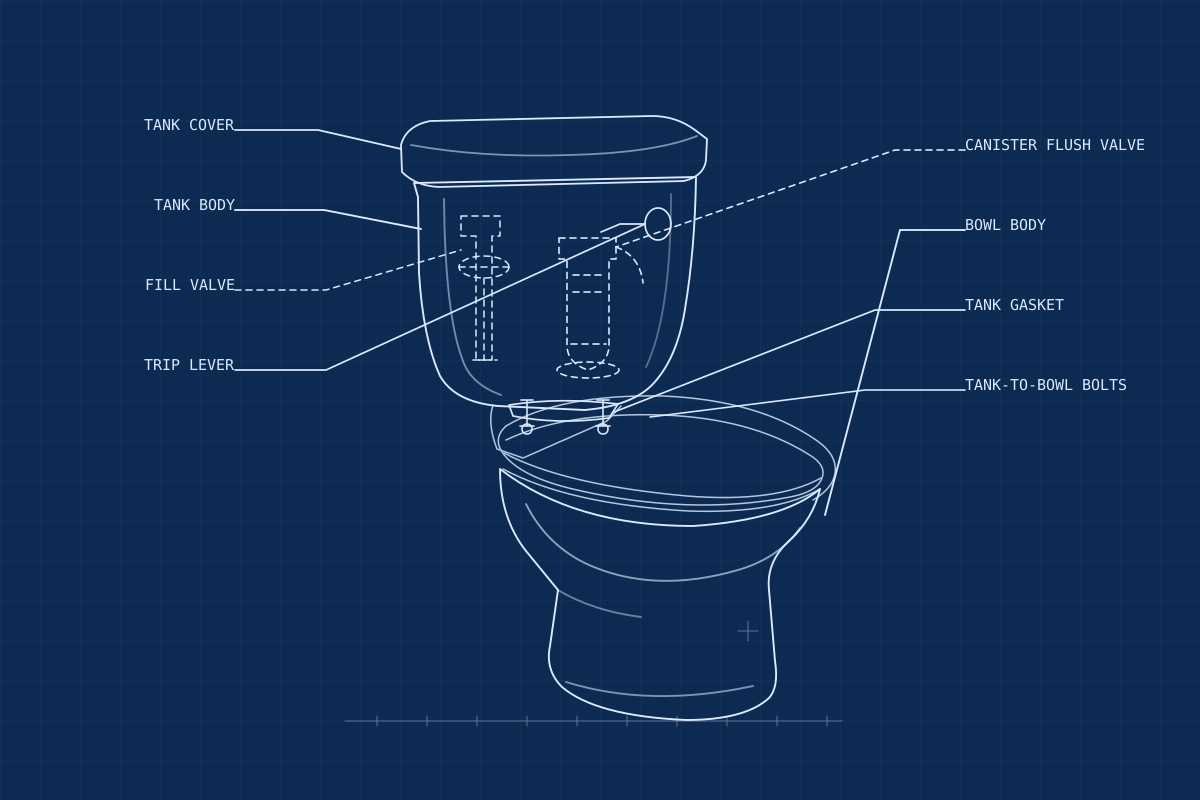
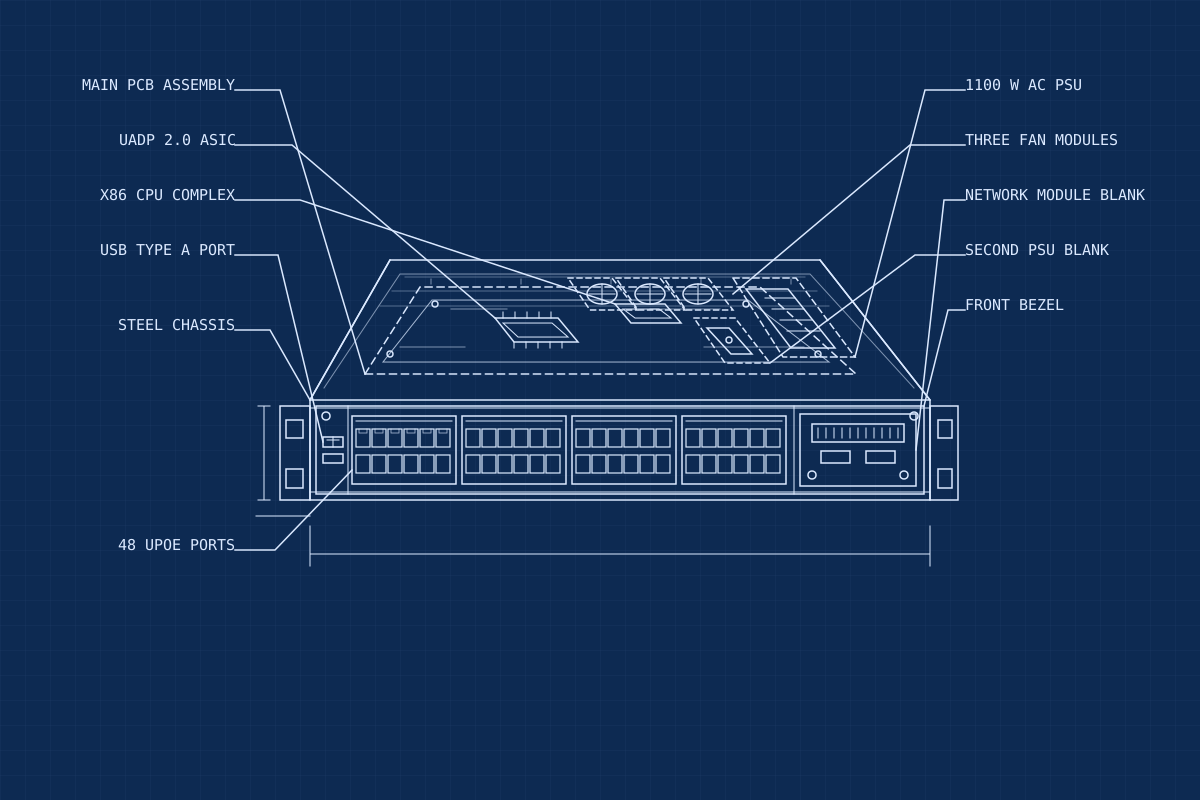
  • A blueprint and 3D model wired to the data both ways — click a part, see its footprint; click a line, find it on the product
  • Benchmarked against a reference product in its category
  • Roughly 60% of a working inventory. A head start, not a report.
The full analysis — when you're in the room
  • Name any product in your portfolio. Not the one we picked.
  • You correct us live. Masses, materials, manufacturing energy, assumptions.
  • The model updates as you talk. Natural language, no rebuild.
  • A Dynamic LCA with data-quality ratings, structured to ISO 14040/14044.
  • Still no BOM required. Bring one and we'll go further. It isn't the price of entry.
Talk to us

A report tells you what happened. A Dynamic LCA tells you what to do.

Five steps. No BOM.

1
Read what's public

An agent goes digging: datasheets, teardowns, product labels, patents, published EPDs, regulatory filings, supplier documentation. Whatever exists.

2
Reconstruct the bill of materials

Better BOMs™ turns those documents into structure — components, materials, masses, quantities. Every line carries the document it came from.

3
Model the footprint

Each component resolves to an emissions factor and a footprint by lifecycle phase — as a Dynamic LCA, not a static report. Swap a supplier, change a material, move a manufacturing location and the number moves while you watch. Declared where the manufacturer publishes a declaration. Modeled where they don't. Labeled which, every time.

4
QA it against a reference

Lucy, our QA agent, compares the result to a reference product in the same category and flags anything outside the expected band. If it doesn't hold up, it doesn't go on this page.

5
Draw it

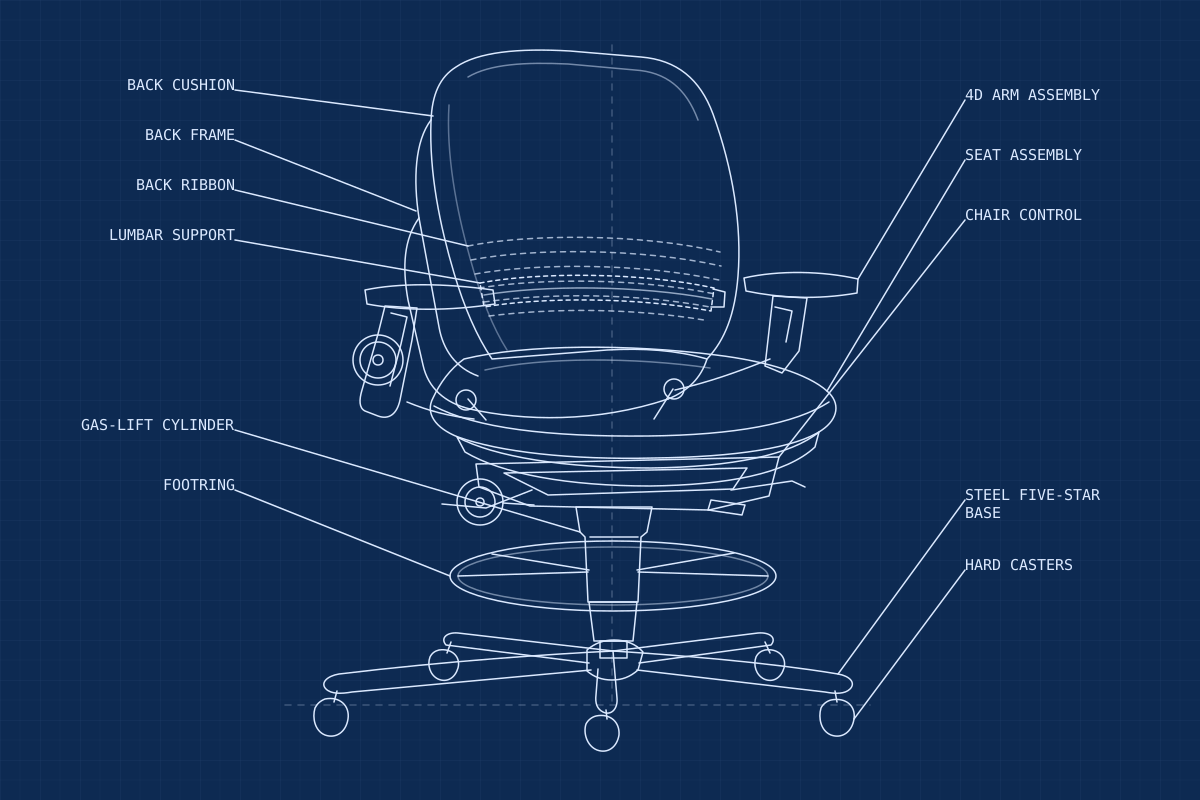
A blueprint and 3D model are generated from public reference images, then wired to the data. Hover a part, see its emissions. Click a line, find it on the product. Both directions.

Start to finish, without asking anyone for anything.

How close is a BOM teardown?

Better to answer that with a number than an adjective.

Where a company has already published an EPD or a product carbon footprint, we tore that product down too, public documents only, their figure hidden until we were done. Across 19 products, our first pass landed within 12% of the number the company published itself.

That's how much to trust anything here. Enough to start a conversation. Not enough to file.

This checks our estimate of a product against that same product's published figure. It's a test of our method, not a comparison between products or companies.
Our estimate vs. published figure
DuPont Tyvek building wrap, published EPDwithin 4%
Saint-Gobain CertainTeed Type X gypsum, published EPDwithin 8%
Mohawk EcoFlex NXT carpet tile, published EPDwithin 11%
Tarkett iQ Granit vinyl sheet, published EPDwithin 16%
Calibration run · 19 products with published figures

Where public documents run out

Exact masses are rarely published. Where we estimate, we show it as an estimate, with the range.
Manufacturing energy isn't public. We use regional averages until someone gives us theirs. Usually the biggest single correction.
Use phase and end of life rest on assumptions you may not share. Also the fastest things to fix in a conversation.
Confidence is per line, never averaged away. If a component sits at 41%, the page says 41%.

Nothing here is verified, certified, or a statement about anyone's product. It's our estimate from public information, shown with its working.

99%
coverage of globally available components
7,200x
faster analysis — Vishay Intertechnology
$3M
savings per 100 products
75%
of supplier LCAs completed in four weeks

Which product should we tear down next?

We add 6 a week. Requests jump the queue. Tell us the product and we'll tell you when it's up.

On the list. You'll get it by email, and we'll say so publicly when it goes up, unless you'd rather we didn't.

Or come run a Dynamic LCA with us in person

ACLCA 2026 · The U.S. Grant, San Diego · September 14–17 · Booth 24

Twenty-minute slots. We open your teardown, you tell us where we're wrong, we fix it while you watch. 15 slots.

Apply for a slot
On stage twice
Precision and Scale in Electronic Carbon Data · Tue 3:30pm
AI + LCA: What's Real, What's Hype · Thu 9:00am

Every teardown on this page is a Sluicebox estimate produced from publicly available documents. These estimates are not verified, not certified, and are not statements by the companies whose products are modeled. Company and product names are used for identification only. Figures are structured to ISO 14040/14044 but have not undergone third-party verification or critical review, and are not intended for comparative assertions or regulatory reporting. To request removal, email support@sluicebox.ai.

© 2026 Sluicebox · Privacy · Terms